
Proactive collections: prevent late payments before the due date
Many late payments happen because customers forget. See how WhatsApp reminders before the due date reduce delinquency and cost less than chasing overdue payments.
By Gabriel Borges Aguiar · November 23, 2026 · 7 min read
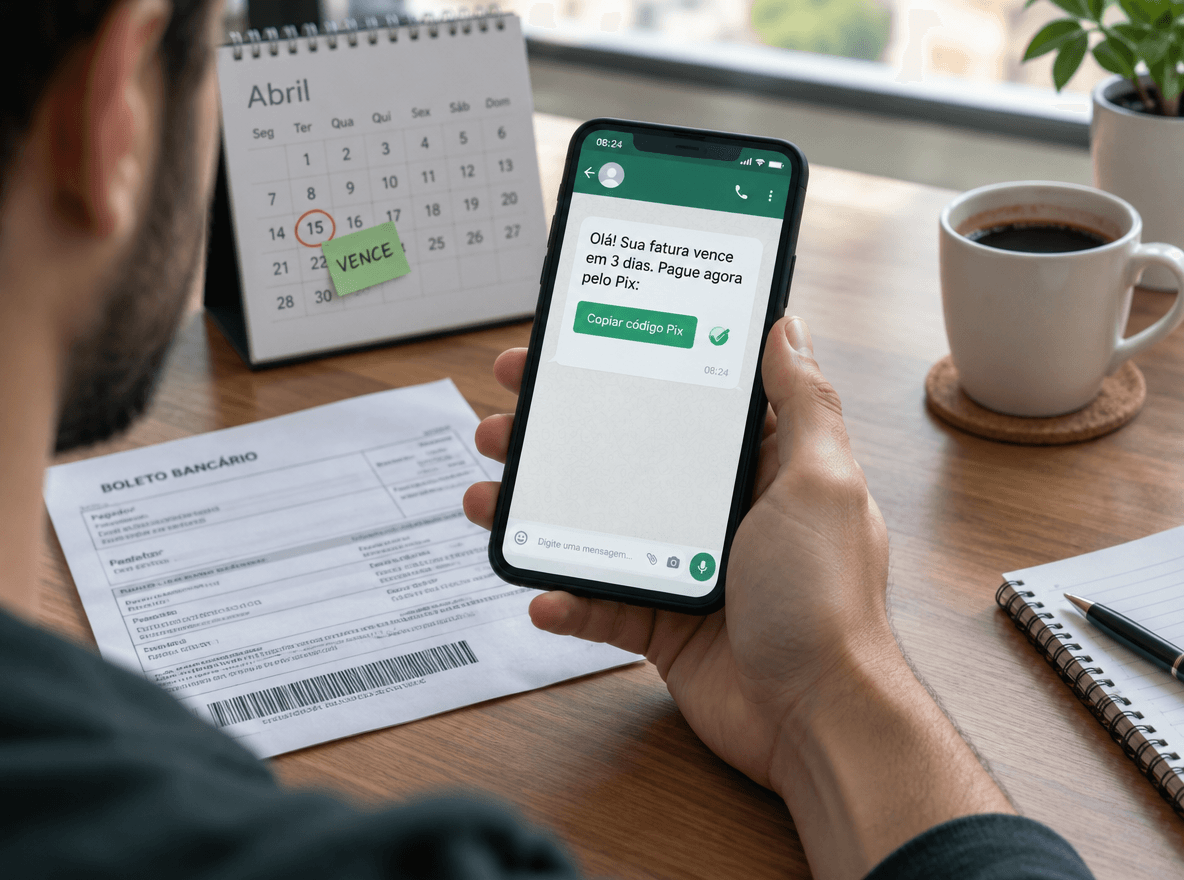
The invoice that never needed to be late: the power of collecting before the due date
At most companies, collections begin the day after the due date. An invoice comes due, the system marks it as overdue, and only then does someone reach out. It may seem like the natural approach, but it overlooks an important cause of late payments: customers who had the money and intended to pay, but simply forgot.
The bill went to the wrong email address, got lost among other messages, or was put off and then forgotten. This customer doesn’t need negotiation, a discount, or pressure. They need a reminder at the right time, with the payment ready to go.
Proactive collections address this issue. Instead of recovering an overdue payment, they prevent it from happening. For anyone managing accounts receivable, it’s the least expensive way to reduce delinquency because it solves the problem before it creates costs.
Not every late payment is caused by a lack of money
When people talk about delinquency, they often picture a customer who can’t afford to pay. But a significant share of overdue invoices are paid just a few days after the due date, right after the first follow-up. That shows the customer could have paid on time. What they needed was a reminder.
These forgetful late payments may seem harmless, but they come at a cost. Money comes in later than expected, cash flow becomes less predictable, and the team spends time chasing customers who never needed to be chased. What’s more, customers who pay late once—even unintentionally—can get used to paying late.
Separating these two groups changes the strategy. Customers who forgot need a simple, timely reminder. Those having difficulty need to negotiate. Treating everyone the same way—and only reaching out after the due date—wastes the easiest opportunity to get paid on time.
Why collecting before the due date costs less than chasing late payments
An invoice that’s still current isn’t a problem yet. It doesn’t require a payment plan, a discount, or a strain on the relationship. All you need to do is remind the customer and make it easy to pay. After the due date, everything gets more expensive: interest, late fees, questions, more attempts to make contact, and often concessions to reach an agreement.
There’s also a behavioral effect. The longer an invoice remains unpaid, the less likely you are to recover the full amount. Customers start prioritizing other bills, and your invoice slips further down the list. Every day of lateness a company prevents is one less day for a debt to age.
That’s why proactive collections can deliver a return that’s out of proportion to the effort. A well-timed message a few days before the due date can solve what might otherwise take several conversations and a negotiation.
What makes a reminder work
Not every reminder works. A generic email sent to the entire customer list at the same time tends to be ignored. To truly reduce late payments, a reminder needs four things.
The right channel. The reminder needs to reach customers where they actually read messages. In Brazil, that’s WhatsApp, where a message is seen in minutes rather than buried in a crowded inbox.
The right timing. A reminder sent too far in advance will be forgotten. One sent on the due date itself may come too late for customers who need time to plan. The ideal approach is usually to combine a reminder a few days ahead with another the day before or on the due date, tailored to each customer’s history.
Payment ready to go. The reminder should include the bill, payment code, or Pix details, ready to use. Every extra step—like searching for the original email or logging into a portal—increases the chance that the customer will put it off.
A helpful tone. Before the due date, there’s no debt yet. The message should feel like a useful heads-up, not a collection notice. This tone preserves the relationship and helps customers see the reminder as a thoughtful service.
Personalization: one reminder doesn’t work for everyone
A customer who always pays on time doesn’t need the same frequency of contact as one who tends to pay a few days late. Sending both the same sequence annoys the first customer and isn’t enough for the second.
Segmenting by payment behavior solves this problem. Customers with a strong payment history get a discreet reminder. Those who are often late receive reminders closer to the due date and another on the day itself. Customers with high-value payments or strategic contracts can get a more thoughtful approach.
Doing this manually across a portfolio of hundreds of invoices isn’t feasible. This is where automation makes a difference: it checks payment history, applies the right sequence to each customer profile, and sends each message at the designated time without the team having to build lists or send messages one by one.
How AI handles proactive collections
Cobrança IA autonomously sends proactive reminders over WhatsApp using data the company already has. Integrated with the ERP or financial system, it identifies invoices nearing their due dates, applies the configured sequence for each customer profile, and sends personalized reminders with the bill or Pix details.
The difference between this and a simple message-sending tool is what happens after the message goes out. If the customer asks for a duplicate bill, AI sends it right away. If they ask about an amount or an invoice, it responds using the information on file. If they say they’ll need more time, the conversation continues based on the terms allowed by company policy or is handed off to a team member.
Once payment is identified, it’s automatically recorded and reminders stop. Customers who’ve already paid won’t receive more messages, and managers can monitor everything in real time from the dashboard. If an invoice still becomes overdue, the same platform moves it into the recovery workflow without losing the conversation history.
Four steps to get started
1. Measure how much of your overdue balance is paid quickly. Find the share of invoices paid within a few days after the due date. This shows how much late payment is caused by forgetfulness—and the gains proactive collections could bring.
2. Set up your reminder sequence before the due date. Decide how many reminders to send, how far in advance, and what each message should say. Start simple: one reminder a few days before and another the day before or on the due date.
3. Segment by behavior. Group customers by payment history and adjust the frequency and tone for each group. Reliable payers get fewer messages, while customers who tend to pay late get more attention.
4. Track results and adjust. Compare the on-time payment rate before and after introducing the proactive reminder sequence. See which days and times lead to more payments, then refine the sequence based on the data.
Metrics that show the results
The main metric for proactive collections is the percentage of payments made by the due date. If it rises, fewer invoices become overdue and the entire collections operation gets easier.
It’s also worth tracking average days to payment, the volume of invoices that reach the recovery stage, and the number of duplicate-bill requests handled before the due date. Every request resolved at this stage is a late payment that never happened.
Finally, keep an eye on costs. When fewer invoices become overdue, fewer negotiations are needed, fewer discounts are offered, and the team can focus on cases that genuinely need attention.
The easiest delinquency to resolve is the kind that never happens. When a company reminds customers at the right time, through the right channel, with payment ready to go, it can stop chasing late payments and start getting paid on time more often.